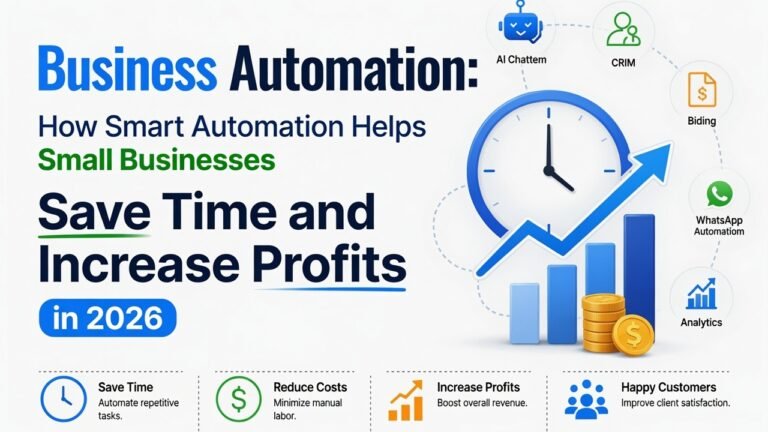
Business Productivity Strategies: How to Improve Efficiency and Achieve Sustainable Growth in 2026
In today’s competitive business environment, productivity has become one of the most important factors for success. Companies are no longer able to rely only on hard work. They need smarter systems, better processes, and modern technology to achieve long-term growth.
Business productivity means using available resources such as time, employees, technology, and money in the most effective way possible.
For small businesses especially, improving productivity can create a major advantage. A company that works efficiently can reduce costs, serve customers better, and compete with larger organizations.
In 2026, businesses are using automation, artificial intelligence, cloud software, and digital tools to improve daily operations and increase performance.
This guide explains the most effective business productivity strategies that companies can use to save time, improve efficiency, and build sustainable growth.
What Is Business Productivity?
Business productivity measures how effectively a company converts resources into valuable results.
A productive business can achieve more using fewer resources.
Productivity includes:
- Completing tasks efficiently
- Reducing unnecessary costs
- Improving employee performance
- Delivering better customer service
- Optimizing business processes
High productivity does not mean employees should simply work more hours. It means businesses should create better systems that allow people to work smarter.
Why Business Productivity Is Important
Improving productivity provides many benefits for businesses of all sizes.
A productive organization can:
- Increase profitability
- Reduce operational expenses
- Improve customer satisfaction
- Complete projects faster
- Make better decisions
- Support business growth
Companies that ignore productivity challenges often experience:
- Wasted time
- Poor communication
- Higher costs
- Employee frustration
- Slow growth
That is why productivity improvement should be a continuous business strategy.
Best Business Productivity Strategies for 2026
1. Automate Repetitive Tasks
One of the fastest ways to improve productivity is through automation.
Many businesses waste hours on repetitive activities such as:
- Data entry
- Email responses
- Scheduling
- Reporting
- Invoice management
Automation tools can complete these tasks faster and with fewer errors.
Examples of business automation include:
- Automated email marketing
- AI customer support
- Accounting automation
- Workflow management systems
By reducing manual work, employees can focus on higher-value activities.
2. Use Business Productivity Software
Modern businesses depend on digital tools to manage daily operations.
Productivity software helps teams:
- Organize tasks
- Manage projects
- Communicate effectively
- Track progress
- Analyze performance
Common productivity solutions include:
- Project management platforms
- Collaboration tools
- CRM systems
- Cloud storage solutions
- Communication software
The right tools create better workflows and improve team efficiency.
3. Improve Time Management
Time is one of the most valuable resources in business.
Poor time management can reduce productivity and delay important projects.
Businesses can improve time management by:
- Setting clear priorities
- Creating daily schedules
- Reducing unnecessary meetings
- Using task management systems
- Setting realistic deadlines
Effective time management helps teams focus on activities that create the most value.
4. Create Clear Business Processes
Many productivity problems happen because businesses lack clear processes.
A strong workflow explains:
- Who is responsible for tasks
- How work should be completed
- What tools should be used
- How progress is measured
Documented processes help employees work consistently and reduce confusion.
5. Improve Team Communication
Poor communication can create delays and mistakes.
Businesses should create effective communication systems.
Helpful strategies include:
- Clear team meetings
- Collaboration platforms
- Regular updates
- Defined responsibilities
Better communication improves teamwork and reduces wasted time.
6. Use Data to Make Better Decisions
Successful businesses use data instead of guessing.
Business analytics tools help companies understand:
- Sales performance
- Customer behavior
- Employee productivity
- Financial results
Data-driven decisions help businesses identify problems and discover new opportunities.
Digital Tools That Improve Business Productivity
Technology plays an important role in modern productivity.
Some useful categories include:
Project Management Tools
These platforms help businesses organize tasks and manage projects.
They provide:
- Task assignments
- Deadlines
- Progress tracking
- Team collaboration
Communication Tools
Communication platforms help remote and office teams stay connected.
They support:
- Messaging
- Video meetings
- File sharing
- Team discussions
Cloud-Based Software
Cloud technology allows businesses to access information from anywhere.
Benefits include:
- Remote access
- Better collaboration
- Data security
- Lower infrastructure costs
AI Productivity Tools
Artificial intelligence is helping businesses automate work and improve decision-making.
AI tools can assist with:
- Content creation
- Data analysis
- Customer support
- Research
- Scheduling
Employee Productivity Improvement Strategies
Employees are one of the most valuable resources of any business. Improving employee productivity does not mean increasing workload. It means creating an environment where employees can complete tasks efficiently and achieve better results.
Businesses can improve employee productivity through the following strategies:
1. Provide Proper Training
Lack of knowledge can reduce productivity.
Employees should receive training on:
- Business processes
- Software tools
- Communication systems
- Industry skills
Well-trained employees make fewer mistakes and complete tasks faster.
Continuous learning also helps teams adapt to new technologies and changing market conditions.
2. Set Clear Goals and Expectations
Employees perform better when they understand what is expected from them.
Businesses should create:
- Clear objectives
- Performance targets
- Project deadlines
- Defined responsibilities
Clear goals help employees focus on important tasks and measure their progress.
3. Encourage Flexible Work Options
Modern businesses are adopting flexible work models.
Remote and hybrid work options can improve productivity by allowing employees to work in environments where they perform best.
Flexible work can provide:
- Better work-life balance
- Higher employee satisfaction
- Reduced commuting time
- Improved focus
However, businesses should maintain proper communication systems to keep teams connected.
How Small Businesses Can Increase Efficiency
Small businesses often face challenges such as limited budgets, fewer employees, and limited resources.
However, small companies can significantly improve efficiency by following smart strategies.
1. Focus on Important Tasks
Business owners often spend too much time on activities that do not directly contribute to growth.
A better approach is to prioritize tasks based on their importance.
Focus on:
- Revenue-generating activities
- Customer relationships
- Business improvement
- Strategic planning
Reducing unnecessary work creates more time for growth.
2. Outsource Non-Core Activities
Not every task needs to be handled internally.
Businesses can outsource activities such as:
- Accounting
- Graphic design
- IT support
- Marketing services
- Administrative tasks
Outsourcing allows companies to access expert services while saving time and resources.
3. Review Business Processes Regularly
Businesses should regularly analyze their workflows.
Ask questions like:
- Are there unnecessary steps?
- Can technology improve this process?
- Are employees spending too much time on manual work?
Regular improvements help businesses stay efficient.
The Role of Artificial Intelligence in Business Productivity
Artificial Intelligence is becoming a major productivity driver for businesses.
AI helps companies automate tasks, analyze information, and improve decision-making.
Some examples include:
AI Content Assistance
Businesses use AI tools to help create:
- Marketing content
- Reports
- Product descriptions
- Business documents
This reduces content creation time.
AI Data Analysis
AI can analyze large amounts of information quickly.
Businesses can use AI insights to understand:
- Customer behavior
- Market trends
- Sales performance
- Business opportunities
AI Customer Support
AI-powered customer support tools provide faster responses and improve customer experience.
They can handle common questions while allowing human employees to focus on complex issues.
Common Business Productivity Mistakes
Many companies struggle with productivity because of poor planning or inefficient systems.
Here are common mistakes businesses should avoid:
1. Using Too Many Tools
Having too many software solutions can create confusion.
Businesses should select tools carefully and focus on platforms that improve efficiency.
A simple system that employees actually use is better than a complicated system nobody understands.
2. Poor Communication
Communication problems can slow down business operations.
Common issues include:
- Missing information
- Unclear instructions
- Delayed responses
Businesses should establish clear communication methods and responsibilities.
3. Ignoring Employee Feedback
Employees often understand operational problems better because they work with processes every day.
Businesses should listen to employee suggestions about:
- Workflow improvements
- Software challenges
- Productivity barriers
Employee feedback can reveal valuable improvement opportunities.
4. Not Measuring Performance
Businesses cannot improve what they do not measure.
Important productivity metrics include:
- Project completion time
- Employee performance
- Customer response time
- Operational costs
- Revenue growth
Tracking these metrics helps companies make better decisions.
Future of Business Productivity in 2026 and Beyond
Business productivity will continue changing as technology develops.
Important future trends include:
AI-Driven Business Operations
More companies will use AI to automate tasks, analyze data, and improve decision-making.
AI will become a standard productivity tool for many industries.
Increased Business Automation
Automation will continue expanding across:
- Marketing
- Sales
- Finance
- Customer service
- Operations
Businesses that adopt automation early will have a competitive advantage.
Cloud-Based Work Environments
Cloud technology will continue supporting remote work and global collaboration.
Businesses will increasingly depend on cloud platforms for:
- Data storage
- Communication
- Project management
- Business applications
Personalized Productivity Solutions
Future software will provide more personalized recommendations based on business needs and employee behavior.
Technology will become smarter and more adaptable.
Frequently Asked Questions
What is business productivity?
Business productivity refers to how efficiently a company uses its resources, including time, employees, technology, and money, to achieve better results.
How can small businesses improve productivity?
Small businesses can improve productivity by using automation, adopting digital tools, improving communication, creating clear processes, and managing time effectively.
What are the best productivity tools for businesses?
Common productivity tools include project management software, CRM platforms, communication tools, cloud software, and AI-powered business solutions.
Does automation improve business productivity?
Yes. Automation reduces repetitive work, saves time, minimizes errors, and allows employees to focus on more important business activities.
How does AI help business productivity?
AI helps businesses by automating tasks, analyzing data, improving customer service, and providing better insights for decision-making.
Conclusion
Business productivity is one of the most important factors for achieving sustainable growth in 2026. Companies that improve their processes, adopt modern technology, and create efficient workflows can achieve better results with fewer resources.
The key to productivity is not simply working harder. It is working smarter through automation, digital tools, better communication, and continuous improvement.
Small businesses that invest in productivity strategies can reduce costs, improve customer experiences, and compete more effectively in the modern digital economy.
As artificial intelligence, automation, and cloud technology continue evolving, productivity-focused businesses will be better prepared for future opportunities.
By implementing the right strategies today, companies can build stronger operations and create long-term success.