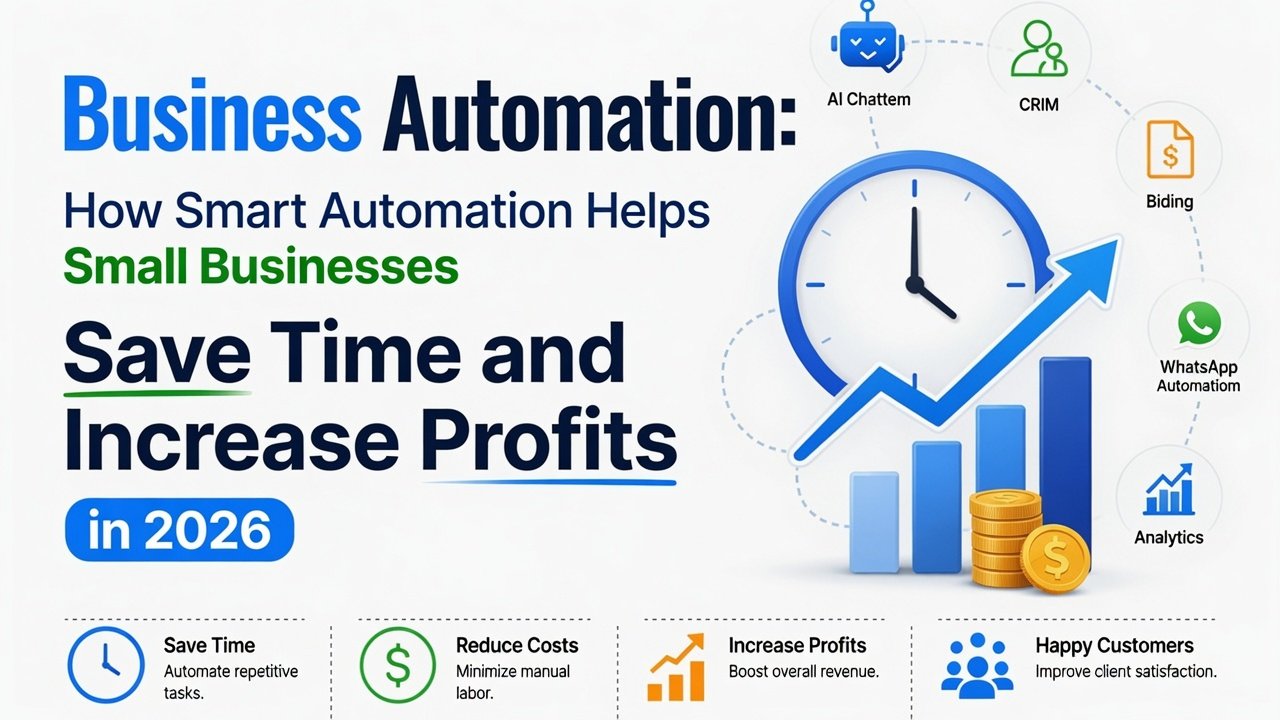
Business Automation: How Smart Automation Helps Small Businesses Save Time and Increase Profits in 2026
Running a small business requires managing many different tasks every day. Business owners often handle customer communication, marketing, sales, payments, employee management, reporting, and daily operations at the same time.
While hard work is important, spending too much time on repetitive tasks can slow down business growth. This is where business automation helps companies work smarter.
Business automation allows organizations to use software, artificial intelligence, and digital tools to complete repetitive processes automatically. Instead of manually performing the same tasks again and again, businesses can create automated systems that save time, reduce mistakes, and improve productivity.
In 2026, automation is becoming one of the most valuable strategies for small businesses because it allows them to compete with larger companies without requiring huge investments.
From automated customer emails to AI-powered business tools, automation is changing how companies operate and grow.
What Is Business Automation?
Business automation is the process of using technology to complete business tasks automatically with little or no human involvement.
These tasks can include:
- Sending emails
- Managing customer information
- Creating reports
- Processing payments
- Scheduling appointments
- Tracking sales
- Managing inventory
- Supporting customers
The main purpose of automation is not to replace people. Instead, it helps employees focus on more important activities such as strategy, creativity, and customer relationships.
For small businesses, automation creates opportunities to save time and improve efficiency without increasing workload.
Why Business Automation Is Important in 2026
Technology is changing the business world quickly. Customers expect faster responses, personalized experiences, and better services.
Businesses that continue relying only on manual processes may struggle to compete.
Automation helps businesses:
- Save valuable time
- Reduce operational costs
- Improve accuracy
- Increase productivity
- Provide better customer service
- Make smarter decisions
Small businesses especially benefit from automation because they often have limited employees and resources.
With the right automation tools, a small team can manage tasks that previously required a much larger workforce.
How Business Automation Helps Small Businesses
1. Saves Time on Repetitive Tasks
One of the biggest advantages of automation is saving time.
Many business activities are repetitive and do not require constant human attention.
Examples include:
- Sending follow-up emails
- Creating invoices
- Updating customer records
- Scheduling meetings
- Posting social media content
Automation software can handle these tasks automatically, allowing business owners and employees to focus on growth activities.
For example, instead of manually sending emails to every customer, an automated email marketing system can send personalized messages based on customer actions.
2. Improves Customer Experience
Customer expectations are higher than ever.
People want quick answers, smooth purchasing experiences, and personalized communication.
Business automation helps companies improve customer experience through:
- Automated customer support
- Chatbots
- Personalized emails
- Customer reminders
- Fast responses
A customer who receives quick and helpful service is more likely to trust a business and become a long-term customer.
3. Reduces Business Costs
Automation can help businesses reduce unnecessary expenses.
Manual processes often require more employee time, which increases operational costs.
By automating repetitive work, businesses can:
- Reduce administrative workload
- Minimize human errors
- Improve resource management
- Increase employee productivity
The money saved through automation can be invested into marketing, product improvement, and business expansion.
4. Helps Businesses Make Better Decisions
Modern automation tools collect valuable business data.
Businesses can analyze information about:
- Customer behavior
- Sales performance
- Marketing results
- Employee productivity
- Financial performance
Data-driven decisions help companies understand what works and what needs improvement.
Many automation platforms now include artificial intelligence features that provide insights and recommendations.
Popular Types of Business Automation
Marketing Automation
Marketing automation helps businesses manage promotional activities more efficiently.
Examples include:
- Email campaigns
- Customer segmentation
- Lead nurturing
- Social media scheduling
- Advertising management
Marketing automation allows businesses to reach customers at the right time with relevant messages.
Sales Automation
Sales automation improves the sales process by reducing manual tasks.
It can help with:
- Lead tracking
- Customer follow-ups
- Sales reports
- Appointment scheduling
- CRM management
Sales teams can spend more time building relationships instead of managing paperwork.
Customer Service Automation
Customer support automation helps businesses provide faster assistance.
Common tools include:
- AI chatbots
- Automated responses
- Help desk systems
- Knowledge bases
These solutions allow businesses to support customers 24/7.
Accounting and Finance Automation
Financial automation simplifies important business processes.
It can automate:
- Invoice creation
- Expense tracking
- Payment reminders
- Financial reports
Accounting automation reduces errors and helps businesses maintain accurate financial records.
Best Business Automation Tools in 2026
Choosing the right automation tools is important because every business has different needs. Some companies need help with marketing, while others need better customer management, accounting, or workflow systems.
Here are some popular categories of business automation tools:
CRM Automation Software
Customer Relationship Management (CRM) software helps businesses manage customer information and improve sales processes.
CRM automation can help with:
- Tracking leads
- Managing customer conversations
- Sending follow-up reminders
- Creating sales reports
- Improving customer relationships
A CRM system allows businesses to understand their customers better and create more personalized experiences.
Project Management Automation Tools
Managing projects manually can become difficult as a business grows.
Project management automation tools help teams:
- Assign tasks
- Track deadlines
- Monitor progress
- Manage team communication
- Automate workflows
These tools improve teamwork and help businesses complete projects more efficiently.
Email Marketing Automation
Email marketing automation allows businesses to communicate with customers automatically.
Businesses can create automated email campaigns for:
- Welcome messages
- Product recommendations
- Customer updates
- Promotional offers
- Follow-up emails
This helps companies maintain relationships with customers without manually sending every message.
Accounting Automation Software
Financial management is one of the most important parts of any business.
Accounting automation tools help manage:
- Invoices
- Expenses
- Payments
- Financial reports
- Tax records
Automation reduces paperwork and helps business owners maintain accurate financial information.
AI Automation for Small Businesses
Artificial intelligence has become a major part of business automation in 2026.
AI-powered tools help companies complete tasks faster and make better decisions.
Small businesses are using AI automation for:
Customer Support
AI chatbots can answer common customer questions instantly.
They can help with:
- Product information
- Order updates
- Basic troubleshooting
- Customer inquiries
This allows businesses to provide support even outside normal working hours.
Content Creation
AI tools can assist businesses with:
- Blog writing
- Social media ideas
- Marketing content
- Product descriptions
- Email drafts
However, businesses should always review AI-generated content to maintain quality and accuracy.
Data Analysis
AI can analyze large amounts of business data and identify useful patterns.
Businesses can use AI insights to understand:
- Customer preferences
- Sales trends
- Market changes
- Business performance
Better information helps companies make smarter decisions.
How to Implement Business Automation Step-by-Step
Many business owners want to automate their operations but do not know where to start.
A simple approach can make the process easier.
Step 1: Identify Repetitive Tasks
Start by finding tasks that take too much time but do not require complex decision-making.
Examples:
- Sending emails
- Creating invoices
- Scheduling meetings
- Updating records
- Generating reports
These are usually the best tasks to automate first.
Step 2: Choose the Right Automation Tools
After identifying tasks, research tools that match your business requirements.
Consider:
- Features
- Pricing
- Ease of use
- Security
- Integration options
The best tool is not always the most expensive one. It should solve your specific business problems.
Step 3: Start Small
Businesses should avoid automating everything at once.
Begin with one or two processes, measure results, and improve gradually.
For example:
First automate email follow-ups.
Then automate customer management.
Then improve sales and reporting processes.
This approach reduces mistakes and makes adoption easier.
Step 4: Train Your Team
Employees need to understand how automation tools work.
Proper training helps teams:
- Use software correctly
- Save more time
- Avoid errors
- Improve productivity
Automation works best when technology and employees work together.
Step 5: Monitor and Improve
Automation is not a one-time activity.
Businesses should regularly review their systems and improve workflows.
Monitor:
- Time saved
- Customer satisfaction
- Business costs
- Productivity improvements
Continuous improvement ensures automation delivers long-term value.
Common Business Automation Mistakes to Avoid
Although automation provides many benefits, businesses can make mistakes during implementation.
Automating the Wrong Processes
Not every task needs automation.
Businesses should first understand their processes before selecting tools.
Automating a poor workflow can create more problems instead of solving them.
Choosing Too Many Tools
Using too many software platforms can create confusion.
Businesses should focus on a few reliable solutions that work well together.
A simple automation system is often more effective than a complicated one.
Ignoring Data Security
Business automation often involves customer and company information.
Security should always be a priority.
Businesses should choose tools that provide:
- Data encryption
- Access controls
- Regular updates
- Security compliance
Protecting customer information helps maintain trust.
Forgetting the Human Element
Automation should support employees, not completely replace human interaction.
Customers still value:
- Personal communication
- Human support
- Understanding
- Trust
The best businesses combine automation with strong customer relationships.
Business Automation and Digital Transformation
Business automation is an important part of digital transformation.
Digital transformation means using modern technology to improve how a business operates.
Companies are combining:
- Cloud computing
- Artificial intelligence
- Automation software
- Data analytics
- Customer management systems
These technologies help businesses become faster, more flexible, and more competitive.
Small businesses that adopt digital transformation strategies can compete more effectively in modern markets.
Future of Business Automation in 2026 and Beyond
Automation technology will continue improving in the coming years.
Some important future trends include:
More AI-Powered Automation
Artificial intelligence will become more advanced and help businesses automate complex decision-making tasks.
Hyper-Personalized Customer Experiences
Businesses will use automation and customer data to create personalized experiences for every customer.
Smarter Business Analytics
Automation tools will provide deeper insights into business performance and customer behavior.
Increased Use of Cloud Automation
Cloud-based automation solutions will continue growing because they provide flexibility and easy access.
More Affordable Solutions for Small Businesses
As technology develops, advanced automation tools will become available to smaller companies at lower costs.
Frequently Asked Questions
What is business automation?
Business automation is the use of software and technology to complete repetitive business tasks automatically, improving efficiency and reducing manual work.
Why should small businesses use automation?
Small businesses can use automation to save time, reduce costs, improve customer service, and increase productivity.
Is business automation expensive?
Not always. Many affordable automation tools are available for small businesses. Companies can start with basic solutions and expand over time.
Can automation replace employees?
Automation is designed to support employees by reducing repetitive work. It allows people to focus on more valuable tasks such as creativity, strategy, and customer relationships.
What are the best business automation areas?
Common areas include:
- Marketing automation
- Sales automation
- Customer support
- Accounting
- Project management
- Data reporting
Conclusion
Business automation has become one of the most powerful strategies for small businesses in 2026. By using modern automation tools, companies can save time, reduce operational costs, improve customer experiences, and increase profitability.
The goal of automation is not simply to use more technology. The real purpose is to create smarter business processes that allow teams to work more efficiently.
Small businesses that adopt automation gradually and choose the right tools can build stronger operations and compete successfully in a digital economy.
As artificial intelligence, cloud technology, and SaaS solutions continue developing, business automation will become even more important for companies looking to achieve sustainable growth.